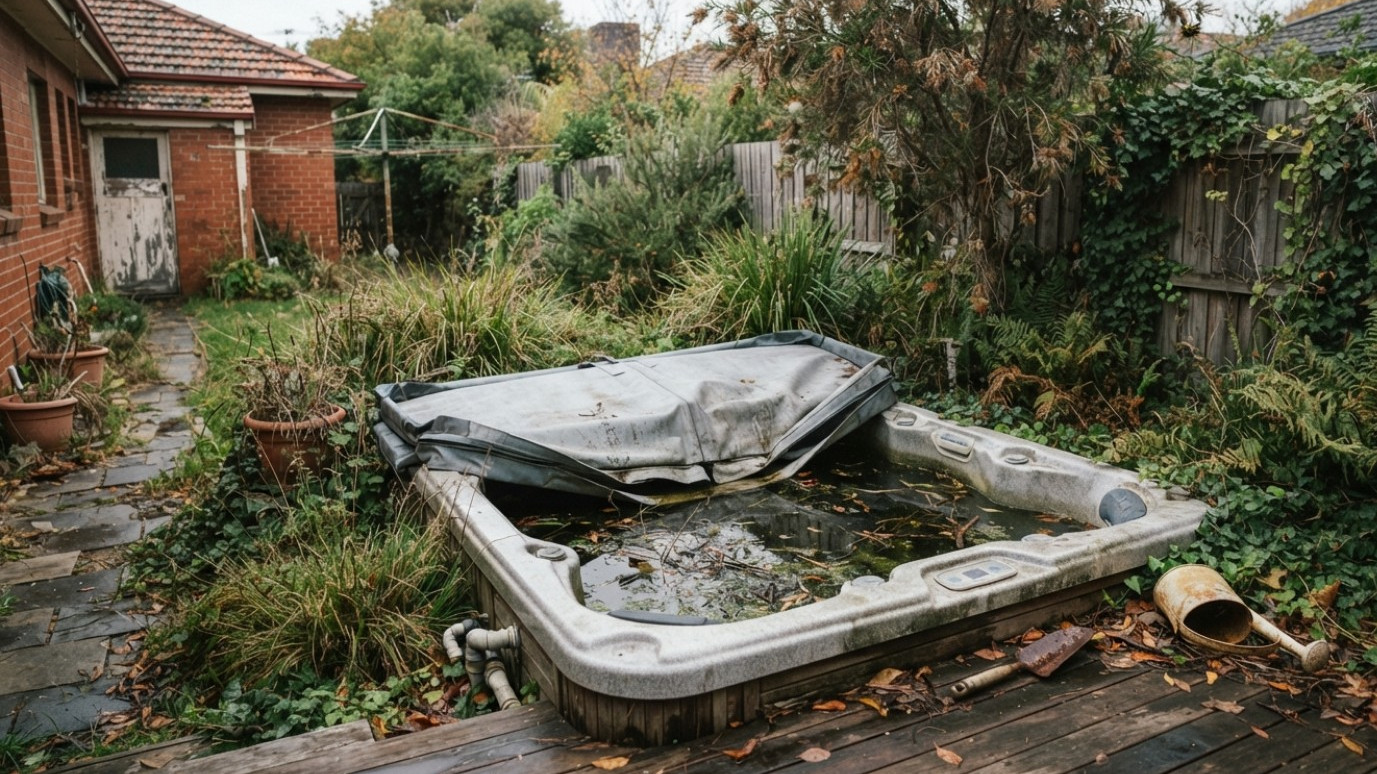
Dig into plenty of Melbourne backyards and you hit it within a spade’s depth: dense, sticky clay that clings to your boots in July and cracks wide enough to lose a pen in by February. It’s the same soil sitting around and under a lot of the city’s backyard pools. Once the pool comes out, that clay has a big say in whether the patch of yard above it stays flat.
The hole a pool leaves behind is bigger than most people picture. At the deep end of an ordinary backyard pool you can be looking at close to two metres. Whatever goes back in there has to stay put for decades. Wet winters, dry summers, and the whole time it’s sitting right up against soil that moves every time the moisture changes.
How clay moves under a backyard
Reactive clay swells when it’s wet and shrinks back as it dries out. How much a site moves is something engineers rate under AS 2870, the Australian Standard for residential slabs and footings. It grades ground from Class A (sand and rock, very little movement) through S, M, H1 and H2 up to Class E for extremely reactive sites. A good share of Melbourne sits toward the middle and upper end of that scale. The basalt plains across the western and northern suburbs are known for clay that moves a lot, and house cracking out west has been common enough for Victoria University to research it.
Ground like that doesn’t forgive a lazy backfill. A poorly filled pool site settles on its own timetable, while the clay around it keeps expanding and contracting regardless, and the lawn on top cops both at once.
Why a filled pool can sink years later
Settlement is rarely obvious at handover. Fresh fill looks level. It’s been raked, maybe turfed, and nobody’s walked on it much yet. The trouble turns up later: a dip after the first wet winter, pavers that start to rock, a garden edge leaning toward where the deep end used to be.
Most of it traces back to how the hole was filled. Loose material tipped in and only compacted at the surface leaves voids all the way down, and water finds them. Over a few seasons the fill consolidates and the surface follows it. Excavated clay thrown straight back in carries its own risk, since it goes in holding whatever moisture it had on the day and keeps shrinking as it dries out.
Under AS 2870, a site with uncontrolled fill can be classed as a problem site (Class P), where footings need to be designed by an engineer.
That’s the detail that catches people out years later, usually when they decide to put a studio or an extension over the old pool.
What good backfill looks like on clay
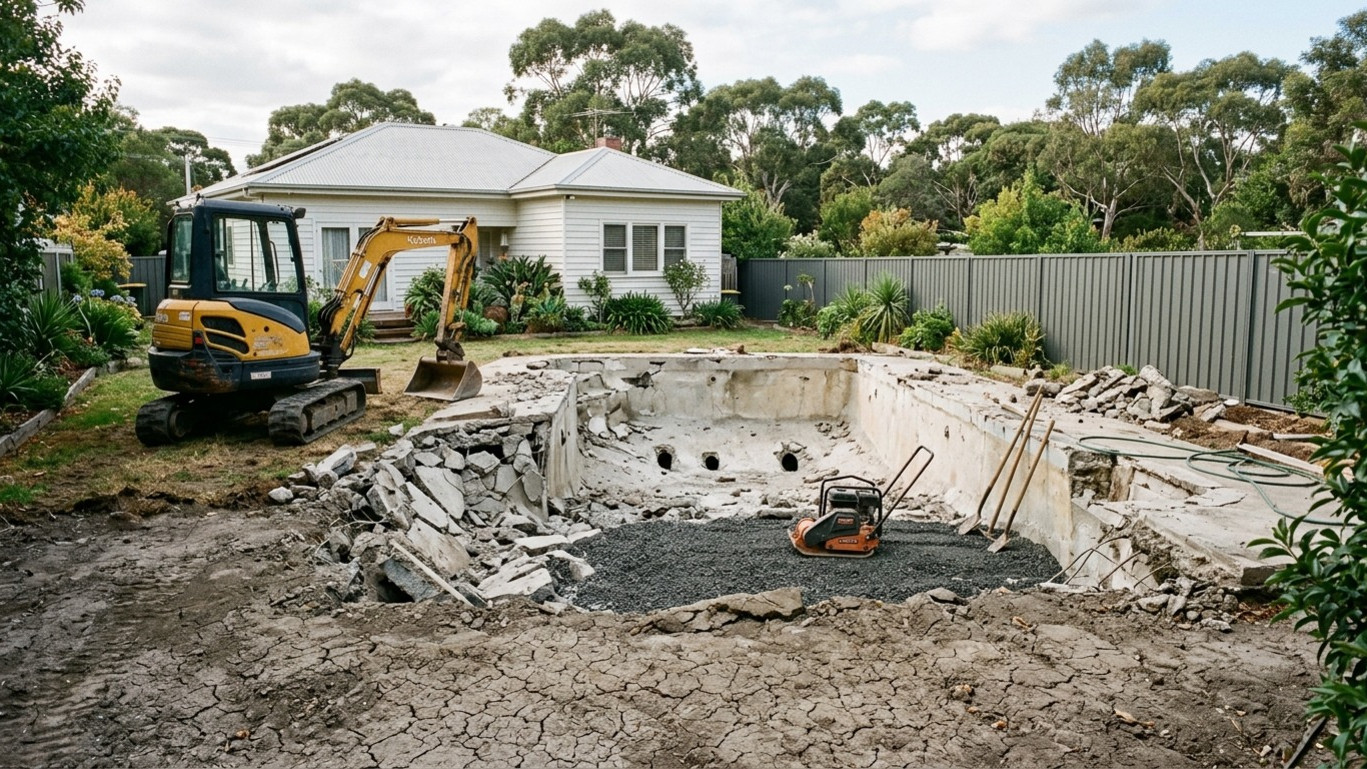
Any decent pool removal Melbourne job on clay is really a backfill job with some demolition at the front of it. Every site is different, but solid work on reactive ground tends to come down to a handful of things:
- Drainage holes broken through the base of anything left in the ground, so water can’t sit trapped in a buried shell
- Clean fill or crushed rock, not whatever spoil happens to be lying around the yard
- Compaction in layers, each one machine-compacted before the next goes in, rather than one big fill and a single pass over the top
- A compaction report or engineer sign-off where there’s any chance of building on the area later
None of it is exotic. It just takes more machine time than tipping the hole full and calling it done, which is exactly why some quotes skip it.
Questions to ask before anyone starts digging
Ask what material is going back into the hole and where it’s coming from. Ask how it’ll be compacted, and in what depth of layers. If a structure might ever go there (a granny flat, a deck on footings, a carport slab), say so at the start, because it changes what the fill has to achieve and what paperwork you’ll want at the end.
Someone who’s worked Melbourne clay for years will answer those without needing to look anything up. A vague answer, or a quote well below the others with no clear reason, usually means the saving came out of the backfill.
Reverse Pools has spent more than 30 years removing and filling pools across Greater Melbourne, on reactive clay and every other kind of ground the city has. If you’re weighing up a removal and want to know how your block’s soil would shape the fill, call our team on 0433 377 969 and get a site visit booked before you commit to anything.