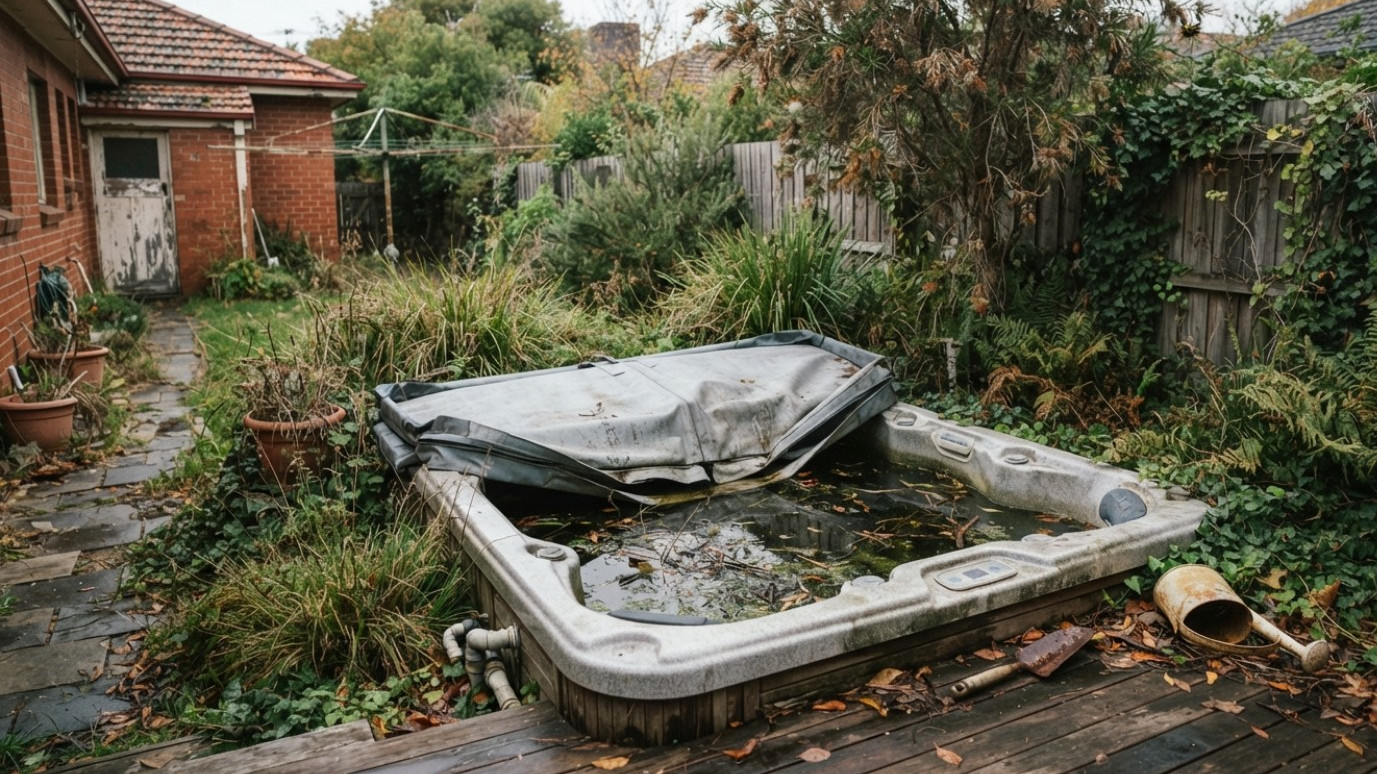
Plenty of Melbourne backyards have one of these: a spa nobody’s touched since a party back in 2023 or so. The cover’s sagging at the corners. The water’s either murky or drained out entirely. At some point it stopped being a feature and became the thing you awkwardly explain when a real estate agent walks past it.
People tend to assume that once a spa’s not being used, it’s harmless. Just sitting there, dormant, not asking anything of anyone. That’s mostly wrong. Even switched off and ignored, a spa’s pump needs power behind it or it seizes up. The water needs occasional treatment, or it turns into something closer to a swamp than a spa. And the shell itself needs to hold its structural integrity, because an insurer who spots a compromised water feature will absolutely ask about it. None of that comes free. It rarely arrives as one big bill either. It’s smaller charges, scattered across years, and eventually the cost of spa removal starts to look cheaper than the cost of leaving it be.
The running costs don’t stop just because you have
A spa heater and pump left in “away” mode still draws power every day it’s plugged in — nowhere near what it costs to run at full temperature, but not nothing either, especially stacked up over a few years of a spa nobody’s using. Skip the maintenance instead of the power bill and the water turns green fast, at which point most owners either dump expensive chemicals into it to bring it back or drain it and let it sit empty, which brings its own problems with a shell that was built to hold water sitting dry in the sun.
Cracks Don’t Stay Small
Acrylic and fibreglass shells give out slowly. There’s a hairline fracture, invisible for a season, maybe two. Then one wet winter finds it, and water starts working its way into the slab or decking underneath instead of staying inside the shell where it belongs. Fixing that isn’t cheap once it’s gotten that far. Decking has to come up, rot needs checking for, the substrate underneath needs patching. All of that costs far more than the original crack would’ve, back when it was still just a crack. Nothing dramatic has to happen for a spa to become a genuine problem. Time alone does the job.
An unused spa still carries safety and insurance weight
A spa that’s been sitting idle for years is still, on paper, a fixed water feature — which means pool safety fencing obligations in Victoria can still apply to it, functioning or not. Insurers have started asking more pointed questions about unused backyard water features too, particularly once a cover’s degraded enough that it’s no longer doing its job. None of that goes away just because nobody’s used the spa since 2022.
The Yard Underneath Is Worth More Than the Spa
Take away the power draw, the eventual repair bill, the fencing and insurance headaches, and you’re left with a few square metres doing nothing at all. Most homeowners don’t weigh that part properly. An old spa isn’t just quietly draining cash. It’s physically sitting on top of what could be a deck extension, a garden bed, somewhere people would actually sit and eat outside. Clear it out, and that same footprint’s suddenly available for whatever the yard’s been missing this whole time.
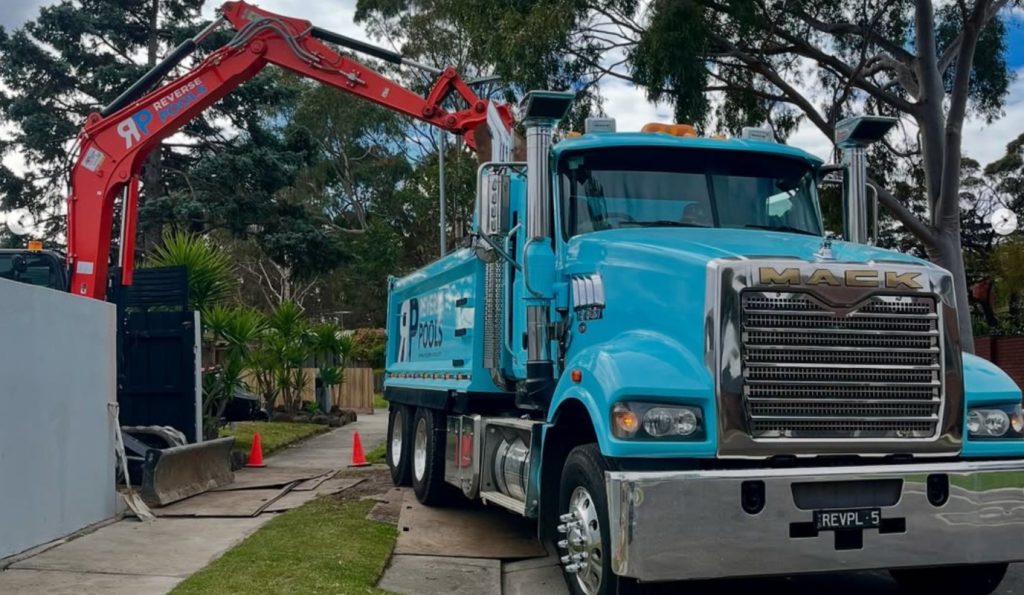
None of this was ever really about the spa. It’s about what leaving it there is costing, month after month, whether anyone’s paying attention or not. If yours has been gathering dust longer than you’d like to admit, get in touch with the Reverse Pools team about what removal would actually cost for your setup. Most jobs end up quicker and cheaper than people expect going in.
